
The basic evaluation approach was as a learning exercise which would systematize information and produced compacted new knowledge about the programme.
The evaluation used seven criteria to assess @LIS2. Five are common to OECD DAC evaluative standards, namely: (i) relevance, (ii) efficiency, (iii) effectiveness, (iv) impact and (v) sustainability.
The remaining two are specific for the EC’s approach: (vi) coherence (with EC development assistance and other countries policies), and (vii) EC valued-added (via complementarity of EU Member States interventions).
Evaluative questions were used translate these criteria into descriptive terms, in order to interpret and report the findings.
The methodology used for gathering the information and knowledge required consisted mainly of a combination of interviews and documental analysis.
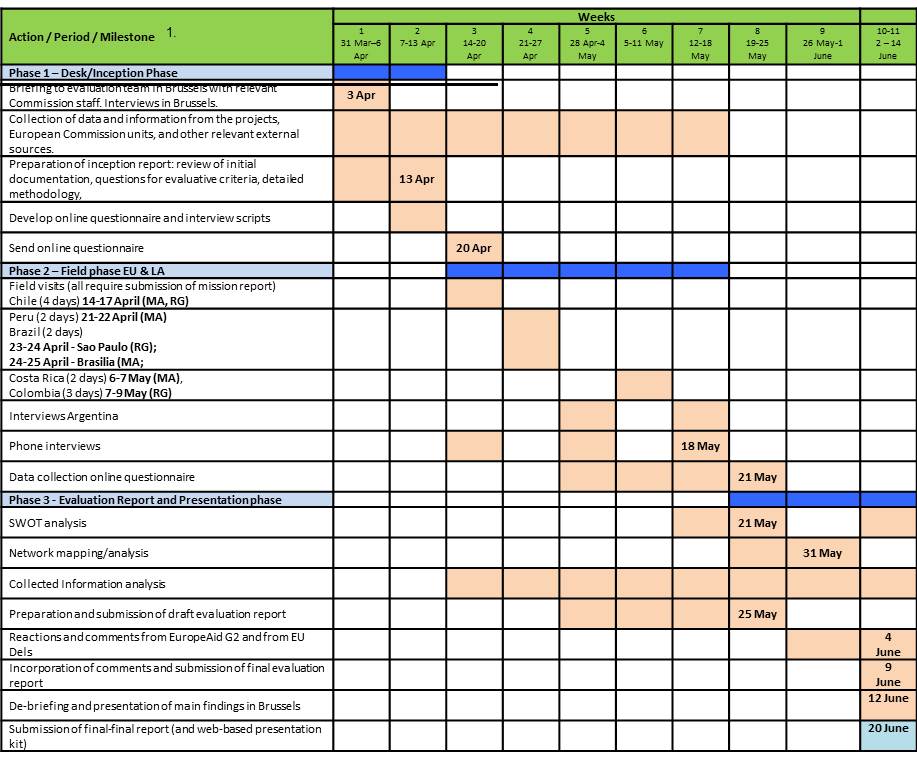
The tasks carried out during the evaluation included:
√ A preparatory desk study
√ Onsite briefing (Brussels)
√ Study of documented resources (e.g. project reports, publications, M&E reports)
√ Interviews (114 people, 10% were via phone, 18% via online questionnaires and email questions). Included (i) project staff, (ii) direct beneficiaries, (iii) external stakeholders, (iv) EC staff involved. (Lists of people interviewed or consulted)
√ Country visits to Chile, Brasil, Peru, Costa Rica and Colombia (+ interviews in Argentina)
Read more (for the complete methodological approach, including evaluative questions)